What happened
The Environment Secretary announced £79m on 30 September 2026 for communities across England to restore nature and adapt to climate change, according to Flood Industry. The publication reported that the government funding would support communities in delivering their own local plans.
According to Flood Industry, £53m of the package is allocated to the Community Trees Fund. Its account also described investment in Local Nature Recovery Strategies but did not specify a value for that funding.
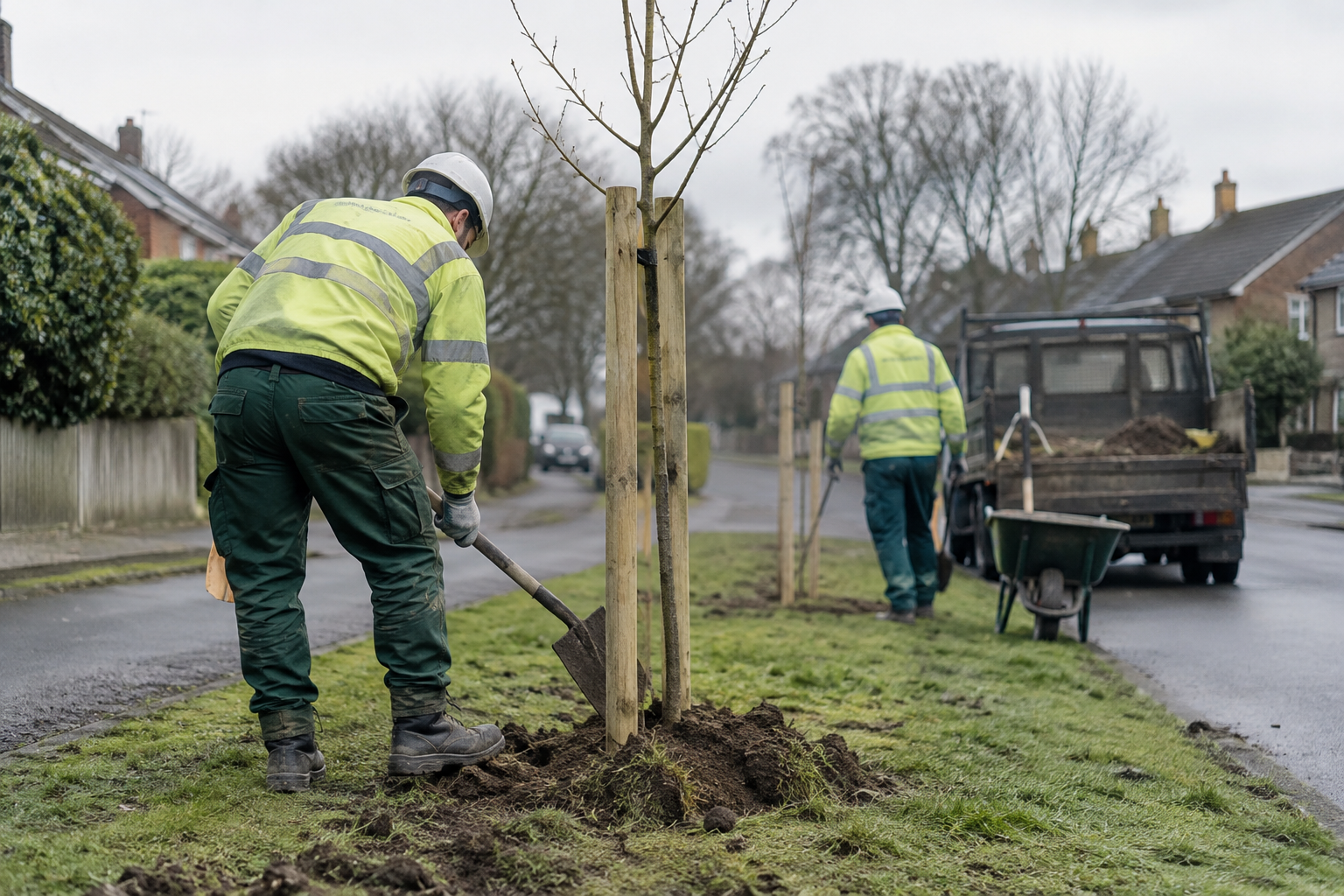
The source identified local authorities, mayors, community groups and environmental organisations as bodies the tree funding would support. It said the investment would bring planting closer to homes and the places people use, with the aim of making neighbourhoods more resilient to climate impacts.
Alongside the rainfall benefits set out in the announcement, Flood Industry reported that street trees can lower urban air temperatures by up to 4°C. It presented this cooling effect as a means of helping communities cope with heatwaves, giving the tree planting investment an adaptation role beyond managing runoff.
The publication also identified habitat provision as a benefit in urban areas where nature has been depleted. It said trees support birds and other species, can reduce noise pollution and have been shown to improve residents’ mental and physical wellbeing.
Flood Industry reported that the investment would contribute to statutory targets for tree planting and nature, as well as net zero. Its account therefore placed the community funding alongside national environmental commitments, rather than describing it solely as a response to extreme weather.
The background
Local Nature Recovery Strategies identify environmental priorities for individual areas and now cover almost all of England, according to Flood Industry. The source described them as community-owned plans that give people familiar with local green spaces a role in deciding where environmental improvements are needed.
The publication reported that 48 local authorities develop and publish the strategies. Their partners include communities, farmers, businesses, planners, land managers and environmental groups, bringing both land management and planning interests into the preparation of local priorities.
According to Flood Industry, this local approach helps authorities target action towards the climate risks affecting their areas and accelerate delivery. For drainage and flood risk practitioners, the measures cited in its account include restoring wetlands to reduce flood risk to homes and businesses.
The source also identified increased vegetation alongside rivers as an intervention to improve water quality. This places river corridors within the strategies’ scope, alongside measures addressing flooding and urban heat, according to its account of local nature recovery.
Flood Industry said the strategies are already helping farmers align land management decisions with the Sustainable Farming Incentive and Countryside Stewardship. It linked that alignment to coordinated outcomes for nature and farm profitability, and to improved resilience as climate and weather conditions change.
The publication also reported that investment in the strategies would support the government’s international commitment to conserve and manage at least 30% of land for nature by 2030. That commitment provides a further policy context for the locally identified priorities.
What people are saying
Flood Industry’s report, published on 5 October 2026, provided no named speaker’s verbatim remarks or responses from prospective funding recipients. Its account of the announcement did not include independent assessments of the expected benefits for flood risk.
The source did not specify the tree species, growing conditions or research behind its rainfall interception and urban cooling figures. It also provided no estimates of the flood risk reduction expected from individual planting or wetland restoration projects.
What happens next
Flood Industry provided no application timetable or allocation process for the Community Trees Fund. Its report did not explain how prospective participants would submit proposals or how planting locations would be selected.
The account also gave no project-level delivery schedule, maintenance requirements or monitoring arrangements for the tree planting programme. For investment in nature recovery strategies, it did not identify individual schemes selected for support.