What happened
Hartlepool Borough Council’s planning approval for the Environment Agency’s £25m Greatham North East scheme in Hartlepool will enable works intended to reduce flooding and coastal erosion and better protect nationally important industry and infrastructure, Flood Industry reported on 5 October 2026.
Further permissions are needed before construction can begin. Environment Agency project manager Joe Reed said work would continue on the relevant licences and consents, alongside engagement with landowners.
Reed said the project’s improvements to flood defences were intended to manage risk over the next 50 years and increase the area’s resilience to a changing climate.
According to Flood Industry, the existing Greenabella embankment will be breached after its replacement has been built. The publication reported that this sequence of works was intended to improve flood resilience and address the effects of climate change.
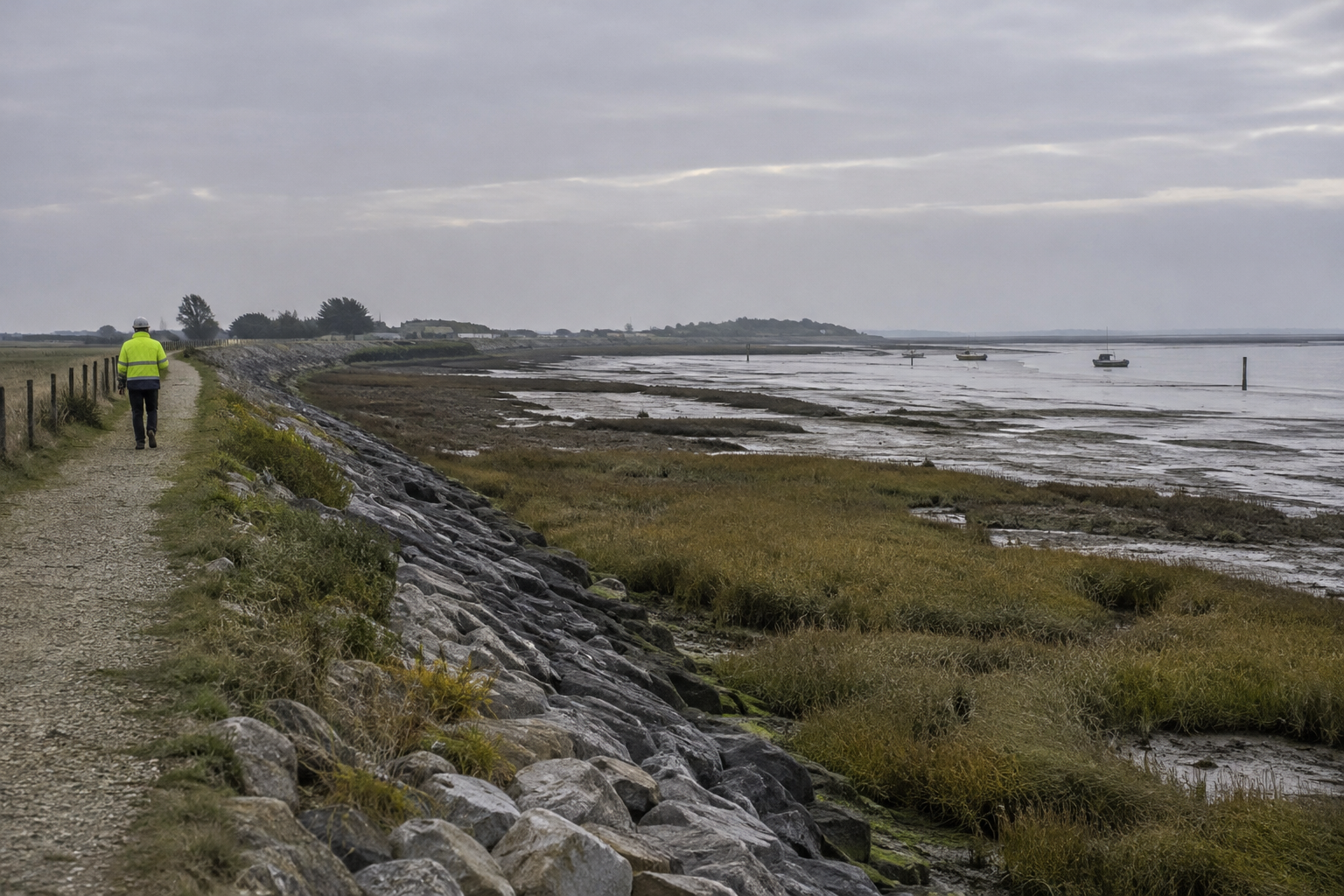
Repairs to the Greatham Creek embankment also form part of the scheme, Flood Industry reported. Reed said the existing defences at Greatham Creek and Greenabella were difficult to maintain because of their construction: both were built in the late 19th century using slag boulders, an industrial by-product.
Reed said local industry and nature conservation organisations supported the scheme. He named Natural England and the Royal Society for the Protection of Birds among its supporters.
The background
Greatham North East sits within the £30m Tees Tidelands Programme, according to Flood Industry. The wider programme aims to change the alignment of flood defences, restore habitats along rivers and in the intertidal zone, and renew connections between the estuary, its tributaries and local communities.
Flood Industry reported that industrialisation had depleted the Tees Estuary’s intertidal habitat over 200 years. Less than 10% of the original habitat is estimated to survive, according to the publication.
The planned habitat restoration includes mudflat and saltmarsh, which Flood Industry said would support wildlife and capture carbon each year. Its report described restoration across a large area of the estuary but did not give a figure for the area involved or quantify the expected annual carbon capture.
Reed said creating habitat would improve local biodiversity and help people reconnect with nature. Those aims accompany the programme’s engineering objectives, with Flood Industry reporting both flood defence realignment and ecological restoration as components of the wider Tees Tidelands work.
What people are saying
Reed said structural investigations had provided the basis for the Environment Agency’s assessment of the existing embankments.
What happens next
Clay from Marsh House Farm is intended for use in building the replacement embankment at Greenabella Marsh, according to Flood Industry. The publication described the farm as close to the construction site.